
Kuhschnappel
Sachsen
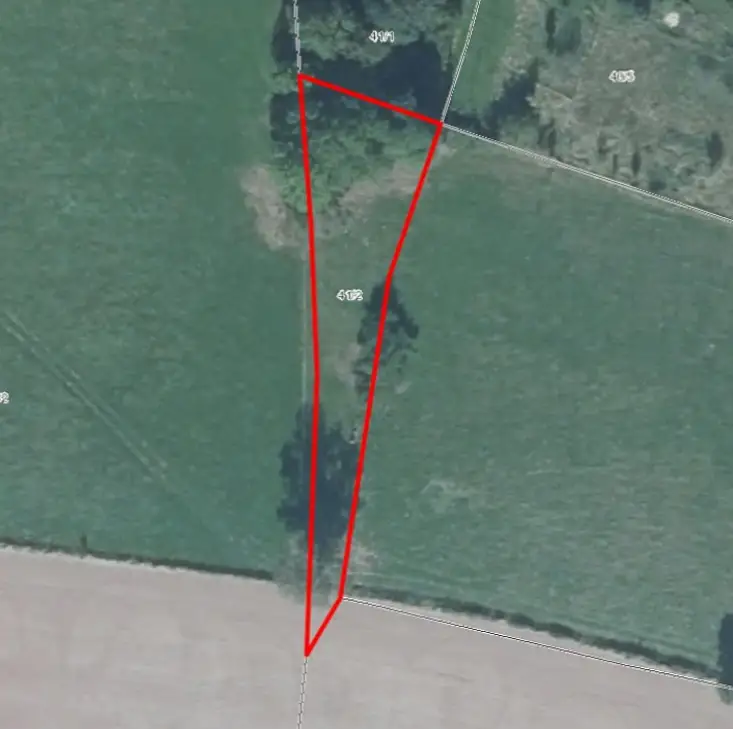
Rewilding Area near Kuhschnappel / Saxony
924 m² of grassland with trees—and currently even with cows
Location: Kuhschnappel near St. Egidien, Saxony
Habitat: Grassland with existing trees
Size: 924 m²
Current situation: The area is currently being grazed
by cattle owned by a third party Rewilding: No commercial use in the future; the area’s further development will be
left to natural processes Status: Existing third-party use is still being clarified
Our site near Kuhschnappel
eMission-X owns a 924 m² grassland area with existing trees near Kuhschnappel in Saxony.
However, during our on-site visit, a small surprise awaited us:
There were cows on our rewilding site.
The area is currently still being grazed by a third party.
And we have absolutely no problem with that—quite the opposite: From a rewilding perspective, large herbivores are actually quite exciting.
Cows on a rewilding site? It’s a better fit than you might think
Rewilding doesn’t automatically mean that an area should turn into a forest as quickly as possible.
Large herbivores have been part of European landscapes for millennia. Through grazing, browsing, and trampling, they influence the vegetation and can help create diverse structures consisting of open areas, shrubs, and woodlands.
Before domestic cattle shaped our landscapes, Europe was home to, among other species, the aurochs—the wild ancestor of today’s cattle.
Bison, wild horses, red deer, and other large herbivores have also influenced—and continue to influence—the development of landscapes.
That is why cattle and other large herbivores are now being used in rewilding projects to allow natural grazing processes to take hold once again.
So a cow is not automatically the opposite of rewilding.
The problem isn’t the cows
However, our cows aren’t really “our” cows.
The animals do not belong to us, and the land is currently being used by third parties.
That’s why we first need to clarify this third-party use.
In doing so, we deliberately distinguish between two things:
Grazing itself can be an interesting ecological process. The commercial use of our rewilding area by third parties, on the other hand, is not our long-term goal.
As long as this situation persists, we’ll first observe what’s happening on the land.
What will happen to the land later?
Once the third-party use has been clarified, we will decide how to proceed with the area.
Our fundamental goal is to permanently remove the property from commercial use.
However, that does not automatically mean that large herbivores will never be allowed there again.
After all, rewilding can also mean allowing natural grazing to resume.
What is crucial for us is the distinction between commercial agricultural use and herbivores as part of natural processes.
Grassland does not have to remain grassland—but it also does not necessarily have to become forest
We do not prescribe a specific future state for Kuhschnappel.
Without regular agricultural use, the vegetation can change. Woodlands can spread, open areas can remain, and new structures can emerge.
Large herbivores, in turn, would influence such a development.
It is precisely this dynamic that is interesting.
Our goal is therefore not:
“A forest must grow here.”
But rather:
“Here, nature should once again have a greater say in what develops.”
An interesting site for the coming years
Kuhschnappel could therefore become one of our most exciting observation sites.
The current baseline conditions can be clearly documented:
924 m² of grassland, existing trees, and current grazing by cattle.
What will the same area look like in a few years?
Which woody plants will spread?
Which areas will remain open?
And what difference will it make if land use changes?
That’s what we want to document.
Rewilding is more than “just doing nothing”
Kuhschnappel thus beautifully illustrates that rewilding doesn’t always mean fencing off an area and then not letting anyone in anymore.
Natural landscapes are dynamic.
Plants grow and die. Animals eat plants. Shrubs and trees spread. Large herbivores keep other areas open.
Our goal is to give these natural processes more space again in the long term.
And until the current issue of outside use is resolved?
Then, for now, the cows can just keep being cows.
Activities
Observations, restoration activities and changes documented with dates and photographs.
No activities have been published for this property yet.
Help create more wilderness.
Your support helps us permanently protect more land for nature in Germany.