
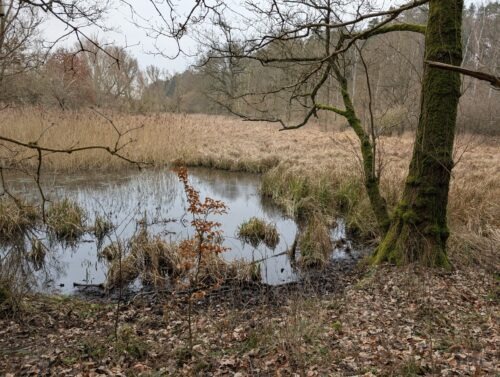
1. Wetland Conservation in Germany: Habitat, Climate Protection, and Challenges
Bogs in Germany are diverse and important. They serve as habitats for highly specialized animal and plant species, store large amounts of water and carbon, and are therefore key contributors to climate protection.
Germany has approximately 1.4 million hectares of bogs, 910,000 hectares of which are used for agriculture!
The total area is divided into 336,000 hectares of raised bogs and approximately 1.08 million hectares of fens.
Wetlands serve as habitats for humans, plants, and wildlife. They have been—and continue to be—used as sources of raw materials and places of worship.
In recent years, however, a new aspect has come to the forefront:
Bogs are important climate protectors!
Undisturbed bogs store large amounts of water and carbon. They therefore serve as important buffers against floods and droughts. In addition, bogs sequester carbon from the atmosphere, which helps combat climate change.
When drained, they lose these functions.
Drained bogs then become sources of climate-damaging gases such as carbon dioxide, nitrous oxide, and methane.
Today, well over 90 percent of bogs have been drained.
Restoration is a key goal. Only restored wetlands can resume their natural functions and thus make an important contribution to climate protection.
2. Current Situation of Wetlands
Importance of the restoration of wetland areas
In recent decades, nature conservation efforts have increasingly focused on restoring wetlands.
The reason is that wetlands are unique ecosystems with diverse functions. They serve as habitats for numerous animal and plant species, store large amounts of carbon, and play an important role in flood control and water supply.
Preserving Biodiversity
Wetlands are home to numerous rare and endangered species. For example, wetlands are home to dragonflies, butterflies, marsh birds, and amphibians. The restoration of wetlands helps to preserve this biodiversity.
Climate Protection
Bogs store large amounts of carbon.
Because it is stored in the peat, the carbon does not enter the atmosphere. Bogs are therefore also referred to as carbon sinks.
Restoring bogs thus leads to a reduction in greenhouse gas emissions and helps combat climate change.
Flood Protection and Water Supply
Bogs are capable of storing large amounts of water. This helps reduce flooding and secure the water supply. The restoration of bogs can help improve these functions.
Ecosystem Services
Bogs provide a number of other benefits to humans. For example, they contribute to air purification, soil conservation, and water quality. The restoration of bogs can help preserve or restore these functions.
Conclusion
Bogs are valuable ecosystems. Their restoration is important for nature conservation, climate protection, and adaptation to climate change. Methane
emissions from fully intact bog areas are negligible because they are offset by peat growth.

3. Why Peatlands Must Be Protected Now
- Providing habitat for a wide variety of highly specialized animal and plant species. Wetlands are home to a wide variety of rare and endangered species, including birds, amphibians, reptiles, fish, and insects.
- Regulation of water and nutrient flows. Wetlands act as natural water reservoirs and filters. They help prevent flooding, improve water quality, and remove nutrients from the water.
- Storing climate-relevant gases. Wetlands are important carbon sinks. They store more carbon than all the world’s forests combined.
- Preservation of archaeological finds. Wetlands are excellent preservatives. They can preserve bones, wood, and other organic materials for thousands of years.
Drained wetlands can fulfill these functions only to a limited extent, if at all.
The drainage of bogs leads to the destruction of habitats for many animal and plant species.
Plants that grow in bogs require specific water levels to survive. If the water level is too low, the plants dry up and die. This destroys the habitat for many animals that depend on these plants.
Drained wetlands also lose their ability to store and filter water. As a result, they can no longer help prevent flooding or improve water quality.
The drainage of bogs also leads to the release of greenhouse gases.
The peat that forms in bogs consists mainly of carbon. When this peat is drained, it begins to decompose, which leads to the release of
carbon dioxide and, in turn, contributes to global warming.
The loss of peatlands is a serious threat to the environment and climate protection.
The protection and rewetting of peatlands are therefore important tasks.
Here are some specific measures that can help protect peatlands:
- Stop or reverse the drainage of wetlands
- Protect peatlands as habitats for flora and fauna
- Raise public awareness of the importance of wetlands for climate protection

The drainage of wetlands has a major impact on climate change, as it causes the release of carbon dioxide and nitrous oxide into the atmosphere.
4. Formation of Wetlands and Their Use
Peat forms in wetlands that develop in areas with at least temporary excess water. The high water levels inhibit the decomposition of biomass produced by growing plants throughout the year. This is primarily due to the lower oxygen content in water compared to air. Oxygen is essential for many bacteria and fungi involved in decomposition.
If more biomass is produced each year than can be decomposed due to the low-oxygen conditions, the bog expands and peat is formed. Peat consists primarily of carbon compounds produced by green plants through photosynthesis. It therefore contains carbon dioxide fixed by plant growth—the primary driver of the current greenhouse effect.
Bogs are a highly effective carbon sink: Although bogs cover only three percent of the Earth’s surface, they store over 30 percent of the total soil carbon reserves.
- Primary stage:
In this phase, peat formation is initiated by the accumulation of dead plant matter in an area with excess water. The plants that grow in peatlands are typically sphagnum mosses. Sphagnum mosses retain a great deal of water and form a dense mat that traps water in the peatland. - Secondary stage:
In this phase, peat begins to form. Due to the low-oxygen conditions in the water, the dead plant parts are not completely decomposed but instead accumulate. As this happens, the peat grows upward. - Tertiary stage:
In this phase, the peat is already several meters thick. The peat continues to decompose, but it also continues to grow upward.
The formation of peat is a very slow process. It takes about 1,000 years for a one-meter-thick layer of peat to form.
Bogs were not cultivated until relatively late because they had to be drained. This was a labor-intensive process and took a long time. Consequently, their use was initially limited to the edges of the bogs.
Among the earliest uses were hunting, firewood harvesting, and the creation of fish ponds. Fish ponds were particularly well-suited to bogs, as they could be built in depressions and were thus naturally supplied with water.

Peat-cutting trench (Source: Stormarn
District Archives https://www.kreisarchiv-stormarn.de/mediadb/50474/)
Peat extraction fundamentally alters bogs. The peat must be drained and the vegetation layer removed. Only then can the peat be cut.

Here, the birch trees clearly illustrate how the dikes built for rewetting have become heavily mineralized and, in some places, have collapsed.
Draining bogs makes agricultural use possible. Former bogs are primarily used for grassland farming and forestry. In nutrient-rich lowland bog soils, arable farming is also practiced.
The drainage of bogs is one of the most common land uses and has far-reaching consequences.

Here you can see the floating mats of peat moss, which indicate that rewetting has been partially successful.
Drainage allows atmospheric oxygen to reach the organic matter in the peat. This organic matter begins to decompose, and the peat becomes less stable.
The pores in the peat, which are important for water absorption, shrink. As a result, the bog can store less water, leading to waterlogging.
The decomposition of the peat is accelerated by soil organisms such as earthworms. This leads to the soil becoming humified and to a change in soil structure.
The altered peat is no longer able to fulfill the original functions of a bog. It retains less water, is less stable, and provides less habitat for bog plants and animals.
Peat extraction causes severe damage to bogs. As a result, large amounts of CO2 are released.

(Source: Stormarn District Archives https://www.kreisarchiv-stormarn.de/mediadb/50418/
In some cases, extraction in shallow areas was not economically viable, resulting in the abandonment of peatland ruins with significant differences in elevation.
The agricultural use of bogs is also associated with drainage. Fertilizing bogs further accelerates peat decomposition.
5. Defining Objectives for Moor Restoration and Measures
Mire restoration begins with defining objectives
In peatland restoration, it is important to first ask what condition the peatland should be in once the measures are complete. Defining these objectives forms the basis for selecting the appropriate measures.
A Vision Statement as a Guide
The guiding vision should provide a comprehensive overview of the development or restoration process and serve as a guide for further measures.
Potential Natural State as a Guide
When defining objectives, the potential natural state of the wetland can also serve as a guide. This is the state the wetland would be in without human influence.
Different Types of Bogs
Bogs vary greatly. In addition to raised bogs, there are nine other hydrological bog types in Central Europe. These differ in their composition, nutrient balance, and the animal and plant species found there.
6. Principles and Goals of Wetland Restoration
Mire restoration aims to restore or preserve the natural functions of mires. To this end, measures are implemented to regulate the water balance of mires, improve the habitats of mire plants and animals, and protect mire soils.
Guiding Principles
Mire restoration should be based on a guiding principle that describes the goals and principles of the initiative. Possible guiding principles include:
- Climate Protection: Wetland restoration can help sequester greenhouse gases and combat climate change.
- Species Conservation: Wetlands are habitats for numerous rare and endangered animal and plant species. Wetland restoration can help protect and promote these species.
- Nature Conservation: Bogs are valuable ecosystems that fulfill a variety of functions. Bog restoration can help preserve or restore these functions.

(Photo: Saher Manna; Source: Stormarn District Archives;
Link: https://www.kreisarchiv-stormarn.de/mediadb/434095/)
Objectives
- Stabilizing and raising the water level in the bog: This is the central goal of bog restoration, as it enables the restoration of the bog’s natural functions.
- Protection and development of habitat-specific biotopes and species: Bog restoration can help improve the habitats of bog plants and animals and support rare and endangered species.
- Sustainable use of resources: In some cases, the sustainable use of bog resources can be compatible with the principles of bog restoration.
Measures
The specific measures for implementing the goals of bog restoration depend on the respective site conditions and the objectives of the measure. Possible measures include:
- Construction of dams and ditches: These measures can help regulate the water balance of bogs.
- Removal of trees and shrubs: This can help increase the amount of light reaching the bog and improve habitats for bog plants
and animals. - Conflicting Objectives: Wetland restoration is a complex undertaking that often involves conflicting objectives. This is because wetlands fulfill many different functions that are not always compatible with one another.
One example of a conflict of objectives is the rewetting of bogs.
It is important for supporting climate protection, as bogs store large amounts of carbon dioxide. However, it can also lead to the loss of habitats for certain species.
The agricultural use of wetlands also presents such a conflict. Wetlands can be used for agriculture; however, farming on rewetted wetlands is often difficult or even impossible.
To avoid conflicting objectives in restoration, it is important to consider the various functions of wetlands and to develop alternative management strategies for restored wetlands.
7. Re-wetting Damaged Wetlands
Damaged wetlands can be restored to their original state through rewetting.
To do this, the ditches that were dug for drainage must be filled in again.
Often, the ditches still allow water to flow, even if at first glance they no longer appear to serve a drainage function. To retain water in the bog, a thorough on-site assessment of the current conditions must therefore be conducted first.
The following aspects must be considered during rewetting:
- Gradual rewetting to avoid overloading the bog
- restoring natural water conditions
- Restoring the ecological function of the bog
The rewetting of bogs is a complex process that must be carefully planned and carried out. The costs of this process are high, but the ecological and economic benefits make it worthwhile.

Habitats and Species
Before rewetting begins, the biotopes throughout the entire area are surveyed. The purpose of
this survey is to continuously document changes in the biotopes over the course of the restoration.
As the water level rises, site conditions change.
Depending on how high the water level is in the area, changes in vegetation will occur. Various plants will establish themselves. Based on this vegetation, it can be determined whether rewetting is actually achieving the desired effect.
If vegetation adapted to high water levels has already established itself, the construction of a barrier, for example, will have only a minor effect.
In addition to biotopes, the animal and plant species present also play an important role in planning a rewetting project. A survey may reveal, for example, that rewetting and the resulting rise in water levels will alter the site to such an extent that rare and endangered species lose their habitat. In this case, the plan for the dam would have to be reconsidered or even abandoned.
8. Topographical, Hydrological, and Soil Conditions
In preparation for the rewetting of a bog, the peat types and the terrain surface of the area must first be assessed.
The peat types determine the pore volumes of the peat, which significantly influence the movement and thus the effectiveness of water within the peat body. The thickness of the bog is also important, as the planks of the barriers must be driven deep enough into the peat to ensure they are securely anchored.
The terrain surface of a bog is often marked by traces of peat extraction. Old peat cutting edges and ditches can cause elevation differences of several meters. Such large elevation differences cannot be overcome with standard dam types. Even small and gentle elevation differences must be taken into account during planning. If the outlet of a barrier is at a higher level than the surrounding area, water will flow around it.
Digital Elevation Model
A digital terrain model (DTM) can provide a rough overview of the elevation conditions in the area. It can be used to identify existing ditches and peat cutting edges. However, the data from the DGM cannot replace the subsequent precise surveying of the barrier locations.
Drainage System
The bog’s drainage system must also be mapped. To do this, drainage ditches and peat extraction edges are surveyed, and their condition as well as the water discharge rate are recorded. Electrical conductivity and pH are measured at various points in the ditch system. Both values indicate whether the water is nutrient-poor water from the bog or whether it comes from the more alkaline subsoil or surrounding area.
Water Level
9. Measures
Planning rewetting measures begins with the collection of data on the bog area. This includes information on the topography, the water balance, the vegetation, and the land use of the area. Based on this data, the optimal locations for barriers are determined.
To maximize the effective range of a barrier, multiple barriers are installed along the course of a ditch. Care must be taken to ensure that the backwater from a lower-lying barrier extends only to just below the barrier located upstream in the ditch. On steep slopes, the effectiveness of a single barrier is not as extensive as on a gentle slope. Therefore, in this case, a correspondingly larger number of barriers must be planned.
A drainage system often consists of parallel ditches. To achieve the widest possible coverage, the barriers are planned with gaps. This means that the barriers are not installed in every ditch, but rather at regular intervals.
Before construction begins, the locations of the weirs are precisely surveyed on-site. The weir type, length, and depth are determined based on the recorded ditch profile. It is particularly important to maintain the proper backwater level of a weir. The water level must be set so that the planned area of effect is achieved and the barrier is not washed over.
When rewetting bogs, the surrounding area must also be taken into account. To avoid negatively impacting agricultural and forestry use, rewetting measures should be planned so that they do not affect the areas currently in use. As a rule, rewetting measures therefore focus on the central areas of the bogs.
Barriers
Over the past 30 years, structures for wetland restoration have undergone fundamental development. Lessons learned from previous construction projects have been incorporated into each new construction phase.
In general, structures for rewetting should meet the following requirements:
- Water retention effectiveness: The structures should effectively retain water for as long as possible.
- Structural safety: The structures should safely retain water even at high water levels.
- Low maintenance: The structures should require minimal maintenance, at least in the medium term, to minimize follow-up costs
Dike
A dam is typically constructed by piling up locally available materials such as peat, wood chips, or mineral substances and is additionally stabilized with logs. This makes it a more cost-effective alternative to conventional trench barriers.
If a dam is built from peat, the settlement and decomposition of the organic material must be taken into account. In such cases, it is necessary to build the embankment higher accordingly.
Since embankments usually require large quantities of material that must be placed using heavy machinery, they are primarily used in peatlands that are well-accessed by roads or have been severely disturbed by peat extraction.
Ditch Barriers
In deep bogs, the use of heavy materials such as precast concrete elements for ditch barriers is not possible, as these would sink into the peat without a foundation. Therefore, lightweight materials such as wood and plastic are used for barriers and supplemented with a layer of peat.
In the past, barriers were sometimes constructed from round logs driven vertically into the ground, which were additionally sealed with polyethylene sheeting. However, their effectiveness is short-lived, and this method is no longer recommended.
In other projects, smaller trenches were sealed with individual planks driven into the peat. These barriers are also not permanently effective, as the planks can be washed away or eroded from below.
Currently, most barriers are constructed from sheet piles driven vertically or horizontally into the peat. These sheet piles are made from a wide variety of materials.
The majority of barriers today are made of wood. These wooden planks are manufactured with tongue-and-groove joints. The wood used is primarily highly resistant to weathering.
The planks must be anchored deep into the natural peat of the ditch shoulder and bottom to provide the structure with adequate stability.
Methods of Installation
There are different construction methods for installing the individual planks into the peat.
Transverse Installation
This method of installing the planks has not proven effective, as it requires deep excavation of the peat. This disrupts the natural bulk density of the peat, which can later lead to problems with the watertightness of the barriers. At the same time, the excavated construction pit quickly fills with water, which must be pumped out using submersible pumps.
Vertical Installation
If the planks are driven vertically into the peat, this can be done in various ways.
These include:
- Excavator
: Using an excavator, the planks can be gently pressed down into the peat with the grab arm.
- Electric hammer
Another option is an electric hammer. A specially shaped attachment on the hammer can also drive the planks into the peat relatively gently. - Pile driver with plastic pad
Another option would be to use a pile driver with a plastic pad to drive the planks into the peat. However, in our own projects, we have found that using the hammer often caused the planks to tilt, resulting in damage to the planks in the upper impact area.
Initial Situation: Trenches
For wide ditches with a relatively high water flow, barriers are constructed consisting of two sheet pile walls placed one behind the other. These double-walled barriers are filled with peat in the middle. This creates an insulating effect and gives the structure greater stability.
For structures in drainage ditches, the issue is whether and how the accumulated water should be drained. In raised bogs fed exclusively by rainwater, the water should generally not be drained through the ditches at all but should remain in the peat. Here, an overflow can be omitted if the structure is designed appropriately.
However, if barriers are constructed in drainage ditches that have a large watershed or discharge external water, controlled drainage is necessary. In dams, for example, this can be achieved through pipe culverts. In the case of double-walled barriers made of sheet piles, an overflow is often constructed, primarily to prevent water from flowing around the sides of the barriers. A problem with overflows, however, is the scouring of the peat beneath the barriers by the flowing water. This can at least be minimized by installing logs or by reducing the slope.
All wooden structures in peatlands generally have a “predetermined breaking point.” While in permanently wet areas the wood, much like the peat, hardly decomposes and retains its structure even after decades, it decomposes much more quickly in the seasonally wet zone. At the same time, shrinkage in this zone leads to longitudinal cracks, which can quickly compromise the water-retaining function of the sheet pile walls. One way to prevent this is to backfill the wooden structure with peat. This helps maintain a balanced moisture level in the wood, thereby minimizing drying out.
Trench barriers in deep peatlands pose a challenge.
10. Monitoring
Monitoring peatland restoration is important to assess whether the intended goals have been achieved and whether adjustments to the measures may be necessary.
Measuring Water Levels
Water level is a direct indicator of a bog’s condition. Rewetting the bog is a key objective of many restoration projects. Measuring water levels before and after a restoration measure can therefore provide insight into the success of the restoration.
Survey of Indicator Species
Bog plants are often adapted to specific water levels and nutrient conditions. An increase or decrease in certain species can therefore indicate changes in environmental conditions. For example, sphagnum moss species can be used as indicator species for water levels close to the surface.
Vegetation Survey
Vegetation surveys are a widely used method for monitoring the success of bog restoration projects. In these surveys, all plant species are recorded in permanent observation plots, and their coverage is estimated. By comparing surveys from different years, changes in vegetation can be identified.
Additional Indicators
In addition to water levels and vegetation, other indicators can also be used to monitor the success of peatland restoration. These include, for example:
- Peat formation: An increase in peat formation is a sign that the wetland is returning to a natural state.
- Greenhouse gas emissions: A reduction in greenhouse gas emissions is an important goal of many restoration projects.
- Wildlife: An increase in wildlife biodiversity is an indicator of improved living conditions in the bog.
Monitoring Plan
The selection of suitable indicators and the frequency of measurements should be defined as part of a monitoring plan. A monitoring plan should, among other things, include the following points:
- Which indicators should be used to assess success
- How should these indicators be recorded?
- How often should measurements be taken
Conclusion
Monitoring the success of bog restoration is an important component of restoration projects. Regular monitoring of the bog allows changes in its condition to be identified and, if necessary, adjustments to the measures to be made.