
The future of nature doesn't begin in the forest
Or maybe it does, after all?
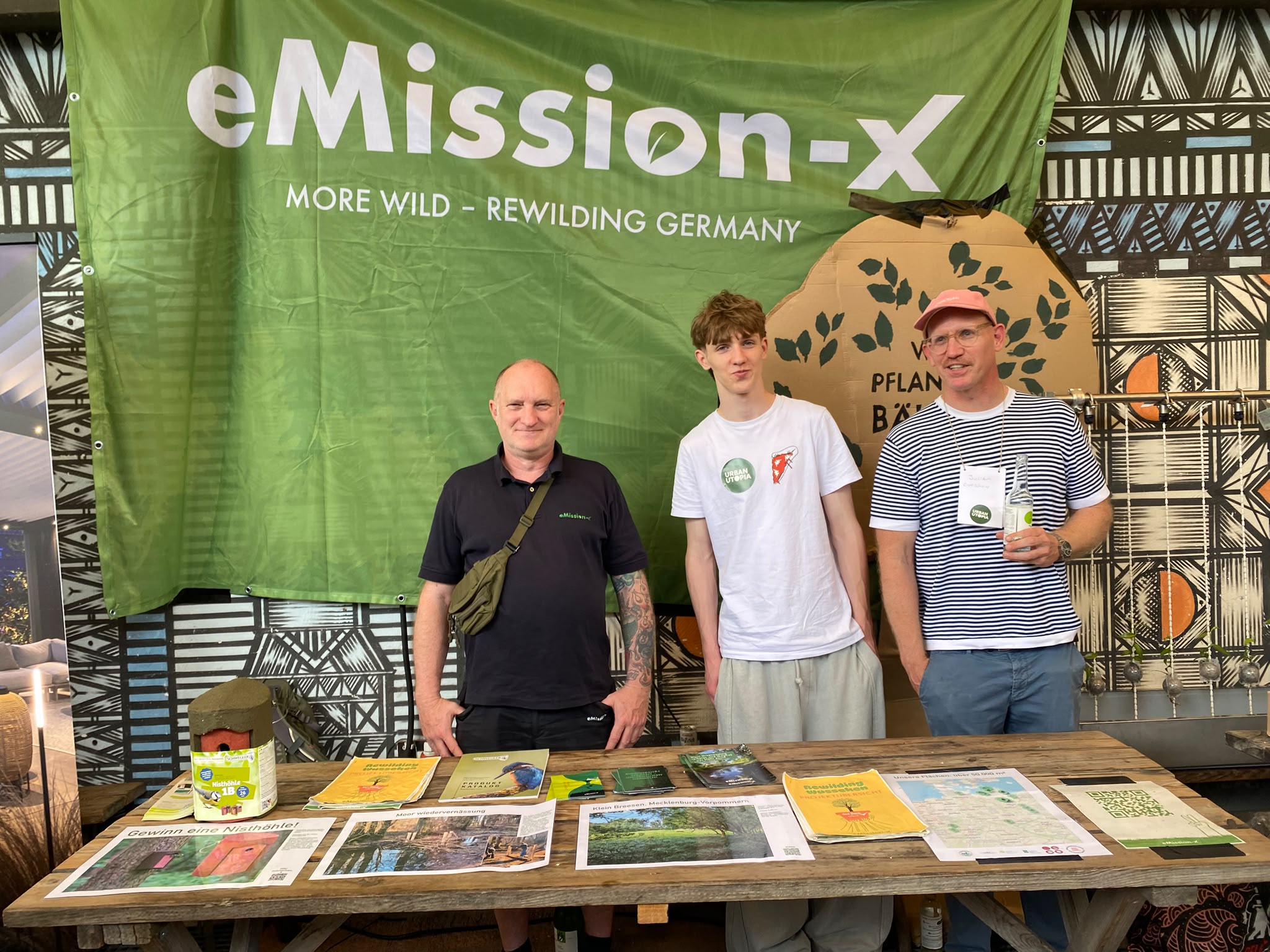
On July 9 and 10, we at eMission-X attended the URBAN UTOPIA Conference 2026 at Holzmarkt25 in Berlin. The event brought together people working toward a shared vision of making cities and living spaces greener, more livable, and more resilient. Under this year’s theme of “Connection,” the focus was on how plants can connect people, ecosystems, and innovations.
The diversity of topics at the “URBAN UTOPIA 2026” event was impressive! From urban development and biodiversity to research, greening buildings, sustainable landscape planning, and innovative business models, the conference demonstrated just how multifaceted the green transformation can be. Expert presentations, workshops, and discussions made it clear that nature is no longer a marginal issue but is evolving into a central component of future economic and social models.
For us, the event was, above all, an excellent opportunity to connect with people who, just like us, are committed to greater biodiversity and the protection of our natural resources.
Rewilding begins where we give nature back its space
While many projects focus on greening our cities, eMission-X takes a complementary approach. We purchase land from industrial agriculture and forestry and permanently return it to nature.
No logging! — No agriculture! — No commercial use!
Because we’re convinced that true biodiversity doesn’t arise from us constantly shaping nature, but rather by giving it back the freedom to develop on its own.
That’s precisely why the discussions at URBAN UTOPIA were particularly exciting. Many participants were interested in how rewilding works as a consistent form of nature conservation and what contribution private initiatives can make to preserving biological diversity.
Nature needs diversity—including in the solutions
The challenges of our time cannot be solved with a single idea. Green roofs, urban forests, sustainable urban planning, and large-scale rewilding are not opposites; they complement one another.
While cities must become more climate-resilient, our landscapes outside metropolitan areas also urgently need more space for natural processes. Only by considering both perspectives together can we create ecosystems that function effectively in the long term.
Our Conclusion
URBAN UTOPIA 2026 demonstrated just how great the interest in innovative solutions for nature, climate, and biodiversity has become. The many conversations, new connections, and inspiring ideas were particularly valuable to us.
We’d like to thank the organizers for a superbly organized event and are already looking forward to the next edition.
Because one thing became clear in Berlin:
The future begins where we give nature back its rightful place—in our cities as well as out in our forests, bogs, and former agricultural landscapes!
Highlights from the event


