
Viecheln
Mecklenburg-Vorpommern
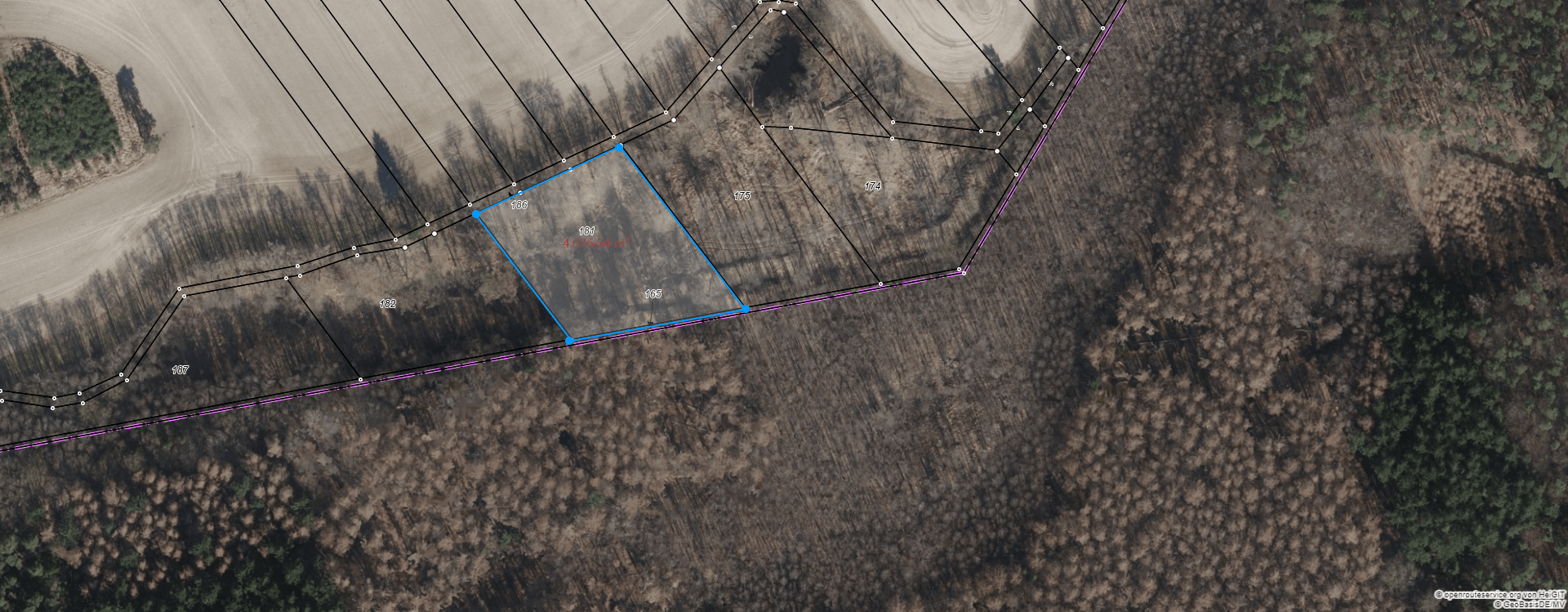
Rewilding Forest near Viecheln, Mecklenburg-Western Pomerania
4,024 m² of forest permanently removed from commercial forestry use
Location: Viecheln near Gnoien, Mecklenburg-Western Pomerania
Habitat: Forest with mature trees
Size: 4,024 m²
Location: Within the Gnoien municipal forest
Rewilding: Permanent cessation of forestry operations and no timber harvesting
Status: Permanently protected and left to natural forest development
Our Rewilding Forest near Viecheln
eMission-X owns a 4,024 m² forested area near Viecheln in Mecklenburg-Western Pomerania.
The property is located within the Gnoien municipal forest and is already characterized by mature trees and dense vegetation.
Unlike former farmland or other heavily altered plots, no plantings or major measures for initial renaturation are necessary here.
The forest is already there.
Our most important measure, therefore, is to cease its commercial use.
Forest Without Timber Harvesting
No forestry operations take place on our land. Trees are not felled for timber, and the forest is not managed according to economic criteria.
Old trees are allowed to continue aging. Dead trees and branches can remain on the site as deadwood, provided there are no compelling reasons requiring intervention.
This allows structures to develop and change in ways that are sometimes only limitedly present in managed forests.
We do not prescribe any specific future state for the forest.
The forest is allowed to continue developing on its own.
Rewilding can also mean doing nothing
Viecheln is a particularly good example of how rewilding does not automatically mean planting trees or actively reshaping the landscape.
Sometimes the most important step is much simpler:
Buying an existing forested area and permanently ending its commercial use.
Natural processes such as aging, regeneration, competition among plants, die-off, and decomposition can then increasingly determine how the area changes.
This is exactly the space we want to give the forest near Viecheln.
Old trees and deadwood are part of the forest
Old and dead trees are an integral part of natural forest development.
Tree cavities, bark crevices, and deadwood can provide habitats for numerous organisms—such as insects, fungi, birds, and bats.
That is why we do not automatically view dead trees as something that must be removed from the forest.
Wherever possible, deadwood remains on our land and becomes part of the forest’s ongoing natural development.
Remaining a forest permanently—without commercial use
The 4,024 m² area remains the property of eMission-X and is permanently excluded from commercial use.
There is no timber production and no traditional forestry management.
Instead, the forest itself increasingly determines what develops there.
This makes Viecheln a practical example of one of our simplest rewilding principles:
Buy a forest. Stop using it. Let the forest be a forest.
Support Rewilding in Germany
Location: Viecheln near Gnoien, Mecklenburg-Western Pomerania
Habitat: Forest with mature trees
Size: 4,024 m²
Location: Within the Gnoien municipal forest
Rewilding: Permanent cessation of forestry operations and no timber harvesting
Status: Permanently secured and left to natural forest development
Our Rewilding Forest near Viecheln
eMission-X owns a 4,024 m² forest area near Viecheln in Mecklenburg-Western Pomerania.
The property is located within the Gnoien municipal forest and is already characterized by mature trees and dense vegetation.
Unlike former farmland or other heavily altered plots, no plantings or major measures for initial renaturation are necessary here.
The forest is already there.
Our most important measure, therefore, is to cease its commercial use.
Forest Without Timber Harvesting
No forestry operations take place on our land. Trees are not felled for timber, and the forest is not managed according to economic criteria.
Old trees are allowed to continue aging. Dead trees and branches can remain on the site as deadwood, provided there are no compelling reasons that require intervention.
This allows structures to develop and change in ways that are sometimes only partially present in managed forests.
We do not prescribe any specific future state for the forest.
The forest is allowed to continue developing on its own.
Rewilding can also mean doing nothing
Viecheln is a particularly good example of how rewilding does not automatically mean planting trees or actively reshaping the landscape.
Sometimes the most important step is much simpler:
Buying an existing forested area and permanently ending its commercial use.
Natural processes such as aging, regeneration, competition among plants, die-off, and decomposition can then increasingly determine how the area changes.
This is exactly the space we want to give the forest near Viecheln.
Old trees and deadwood are part of the forest
Old and dead trees are an integral part of natural forest development.
Tree cavities, bark crevices, and deadwood can provide habitats for numerous organisms—such as insects, fungi, birds, and bats.
That is why we do not automatically view dead trees as something that must be removed from the forest.
Wherever possible, deadwood remains on our land and becomes part of the forest’s ongoing natural development.
Remaining a forest permanently—without commercial use
The 4,024 m² area remains the property of eMission-X and is permanently excluded from commercial use.
There is no timber production and no traditional forestry management.
Instead, the forest itself increasingly determines what develops there.
This makes Viecheln a practical example of one of our simplest rewilding principles:
Buy a forest. Stop using it. Let the forest be a forest.


Activities
Observations, restoration activities and changes documented with dates and photographs.
No activities have been published for this property yet.
Help create more wilderness.
Your support helps us permanently protect more land for nature in Germany.